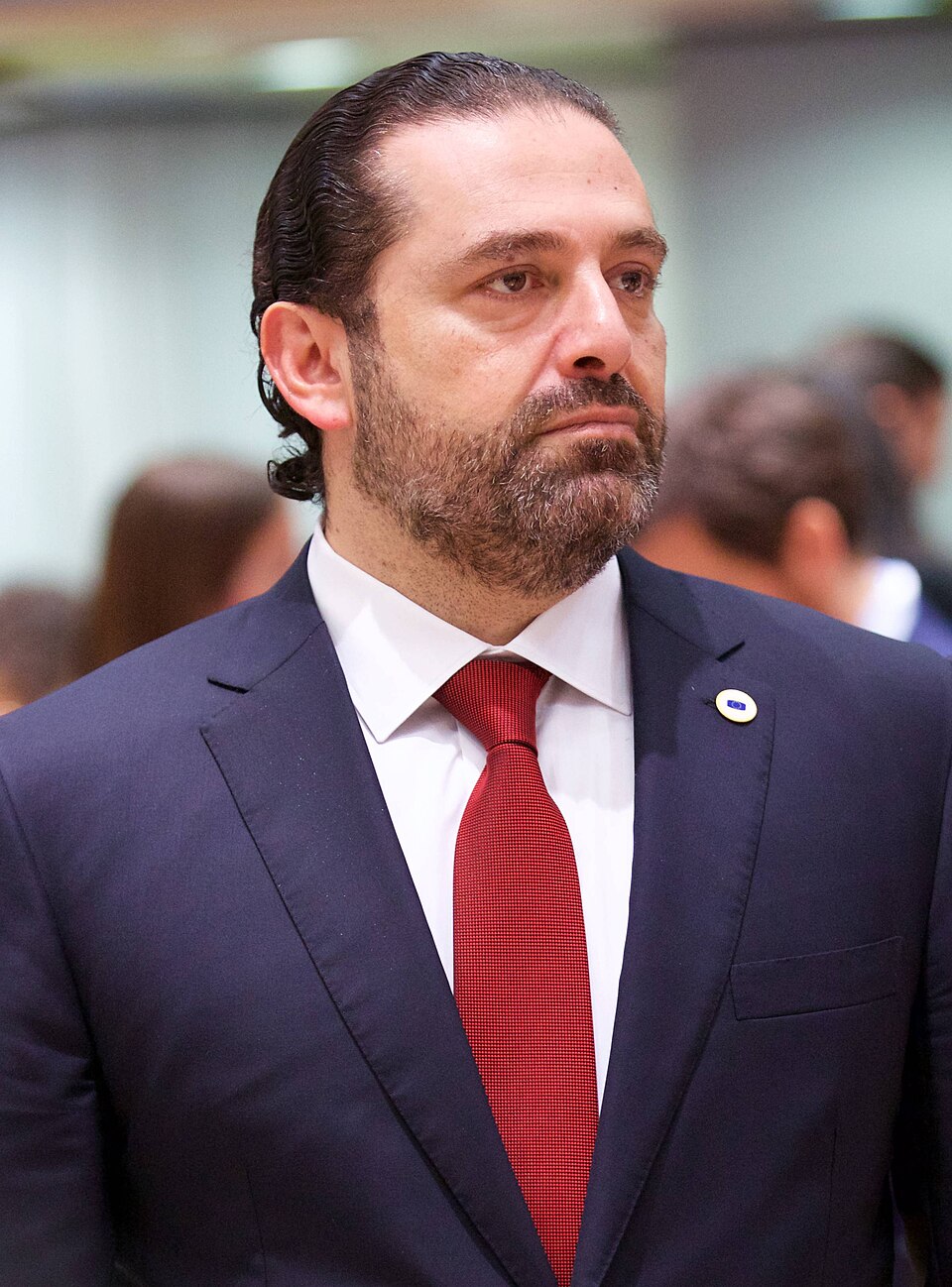
The Billion-Dollar Nexus: How Saad Hariri's Fortune Forged His Political Destiny
Saad Hariri, a name synonymous with both immense wealth and a turbulent political career in Lebanon, stands as a prime example of how vast personal fortune can intricately shape a nation's leadership. From inheriting a substantial portion of his family's sprawling business empire to assuming the highest political office, the trajectory of Hariri's public life is inseparable from his financial clout. Understanding
Saad Hariri's net worth is not just about appreciating the scale of his personal wealth; it's about dissecting a fundamental aspect of Lebanese politics, where economic power often translates directly into political influence.
Born Saad-eddine Rafiq Al-Hariri in Riyadh, Saudi Arabia, in 1970, his journey was destined to be extraordinary. The son of the late Lebanese Prime Minister Rafiq Hariri, Saad was immersed in a world of high-stakes business and politics from an early age. His academic foundation was laid at Georgetown University’s McDonough School of Business, where he graduated in 1992 with a major in Business Administration. This education proved crucial as he would soon navigate the complexities of a multi-billion-dollar empire.
The Genesis of a Fortune: From Family Legacy to Business Titan
The bedrock of Saad Hariri's immense wealth was his family's established business conglomerate. Before his foray into politics, Hariri was deeply entrenched in the corporate world, following in the footsteps of his entrepreneurial father. Upon the tragic assassination of Rafiq Hariri in 2005, Saad, along with his siblings, inherited a significant fortune. While the initial inheritance figure reported around that time was approximately $4.1 million per sibling, this was merely a fraction of the total family wealth, which was distributed among them, elevating them to the ranks of global billionaires. This inheritance immediately placed him on Forbes' list of the world's richest individuals, providing an unprecedented financial launchpad.
Hariri’s pre-political career saw him at the helm of formidable enterprises. He served as the chairman and CEO of Saudi Oger, one of Saudi Arabia's largest and most influential construction companies. This powerhouse was involved in massive infrastructure projects across the Middle East, generating colossal revenues. Beyond construction, Hariri also chaired the executive committee of Oger Telecom, a significant player with telecommunications interests spanning the Middle East and Africa. These leadership roles not only honed his business acumen but also solidified the financial base that would later serve as a potent asset in his political pursuits.
Saad Hariri Net Worth: Unpacking the Billion-Dollar Empire
Estimates of
Saad Hariri's net worth have varied over the years, a common phenomenon for individuals with vast and complex portfolios exposed to market fluctuations and divestments. While Forbes reported him at $1.9 billion and #794 on the World Billionaires List in March 2013, with a peak of $6.5 billion cited in some reports, more recent figures suggest an estimated net worth around $1.3 billion as of 2025. Regardless of the exact fluctuating figure, his wealth consistently places him among Lebanon's richest individuals, if not the wealthiest.
His fortune is primarily anchored in the family’s extensive business interests, with construction and real estate through Saudi Oger forming the undeniable backbone. However, his financial reach extends beyond these sectors, encompassing diverse investments in media and telecommunications. This diversified portfolio has provided not only financial security but also a powerful network of influence, both domestically and internationally. The sheer scale of these operations means that Hariri commanded significant economic leverage long before he ever stepped into a governmental role.
From Economic Powerhouse to Political Leader: The Transition
Saad Hariri's entry into the tumultuous world of Lebanese politics was less a gradual ascent and more a sudden plunge, catalyzed by the assassination of his father. Taking up the mantle, he quickly became a central figure in the March 14 Alliance, a political coalition formed in opposition to Syrian influence in Lebanon. His immense personal wealth played an undeniable role in this transition and subsequent political trajectory.
A significant fortune like Hariri's provides unique advantages in the political arena. It offers financial independence, allowing a leader to fund extensive political campaigns without relying heavily on external donors, thereby theoretically reducing susceptibility to external pressures. His family's established business networks also translated into a vast web of political connections and a ready-made base of support. He took office as Prime Minister on November 9, 2009, a testament to his rapid political rise and the weight of his family's name and resources.
However, his premiership was not without its challenges. His government collapsed on January 12, 2011, when opposition parties walked out and resigned from the cabinet, citing issues with the government's decision-making abilities. He ultimately lost his post to Najib Mikati on June 13, 2011. Even out of office, Hariri’s financial standing ensured he remained a potent political force, enabling him to continue supporting his political factions and maintain his public profile. He famously became a vocal opponent of Syrian dictator Bashar al-Assad, a stance that reportedly led to an arrest warrant from the Syrian government on claims of funding Syrian opposition groups—a charge that, if true, further highlights the intersection of his wealth and geopolitical actions.
Wealth as a Tool: Philanthropy, Influence, and Soft Power
Beyond direct political funding, Saad Hariri has leveraged his wealth for broader philanthropic initiatives, significantly impacting Lebanon's post-civil war reconstruction efforts and the establishment of educational institutions. His family’s legacy in rebuilding Lebanon, particularly Beirut, after the civil war, is well-documented and has often been driven by the Hariri Foundation, a testament to their commitment to national development. He has also been a substantial donor to the United Nations and various other international organizations, extending his influence on a global scale.
These philanthropic endeavors are not merely acts of charity; they represent a strategic deployment of soft power. By investing in education, infrastructure, and international aid, Hariri cultivates goodwill, strengthens public perception, and builds social capital. This capital, in turn, can be converted into political support, fostering loyalty and trust among constituents and international partners alike. The ability to funnel vast resources into national development and humanitarian causes underscores how
Saad Hariri's net worth is not just personal affluence, but a significant instrument of national and international influence.
The Unique Interplay: Navigating Politics with Immense Wealth
The story of Saad Hariri offers a fascinating case study in the unique interplay between inherited wealth and political leadership, especially in a complex political landscape like Lebanon's. On one hand, his enormous fortune provided an unparalleled platform: the financial independence to pursue a political career, the resources to fund large-scale campaigns, and the inherent credibility often associated with successful business acumen. This financial cushioning allowed him a degree of flexibility and resilience that many politicians lack, particularly during periods of political adversity or when needing to project strength on the international stage.
However, immense wealth in politics also comes with its challenges. It can foster perceptions of elitism, creating a disconnect between the leader and the ordinary citizen. Furthermore, the sheer scale of his family's business dealings often subjected him to intense public scrutiny and, at times, accusations related to business practices or conflicts of interest. For any public figure endowed with such a fortune, balancing the advantages of wealth with the imperative of public trust and accountability is a tightrope walk.
Understanding the magnitude of the Hariri family's economic footprint, from construction giants like Saudi Oger to telecommunications ventures, helps us grasp how such resources can be mobilized not just for profit, but for shaping national narratives, funding political movements, and even influencing regional dynamics. For a deeper dive into how his family's empire intertwines with his public service, explore
Saad Hariri Net Worth: Family Empire, Politics, & Philanthropy. To unpack the specific details of his billions, don't miss
Saad Hariri's Net Worth: Unpacking The Billions of Lebanon's Richest.
In conclusion, Saad Hariri's political journey is deeply and inextricably linked to his multi-billion-dollar fortune. His inherited wealth provided the foundation for his business empire, which in turn served as a powerful launchpad for his political career. While his time as Prime Minister was marked by both achievement and governmental collapse, his enduring influence in Lebanon and beyond cannot be separated from his financial capabilities. His story highlights the profound and multifaceted ways in which wealth can shape political power, philanthropy, and a nation's destiny.