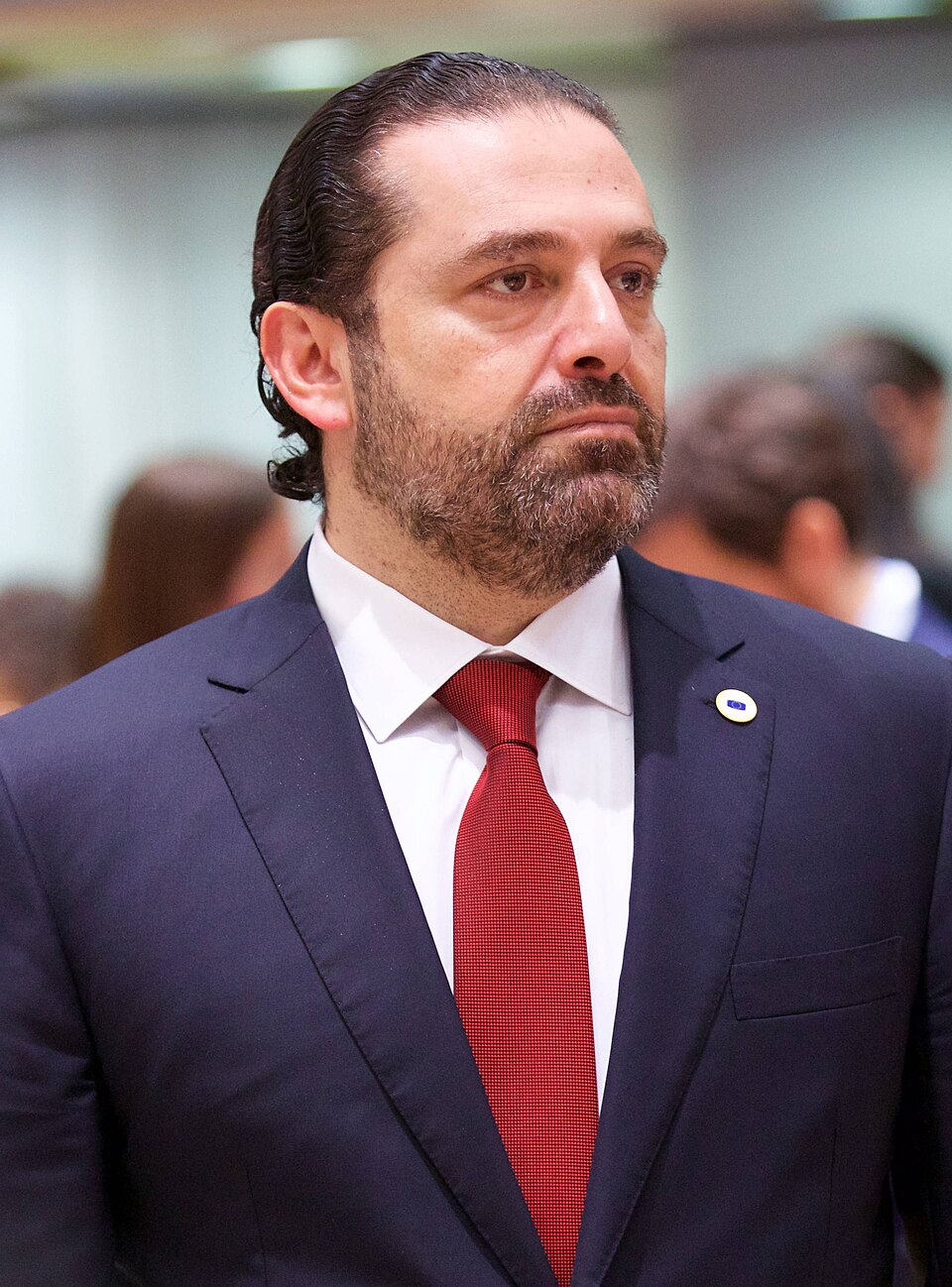
Saad Hariri's Net Worth: Unpacking The Billions of Lebanon's Richest
The name Saad Hariri resonates through the corridors of power and business, a figure deeply intertwined with Lebanon's modern history. As a former Prime Minister and scion of a prominent political and commercial dynasty, the question of Saad Hariri's net worth is not merely a matter of financial curiosity but a key to understanding his influence and the economic landscape of the Middle East. His fortune, inherited and expanded through shrewd business acumen, places him among the wealthiest individuals in the region, a position that has profoundly shaped his political career and philanthropic endeavors.
Hariri's financial standing, a subject of public fascination and varying estimations, is a testament to the colossal business empire built by his late father, Rafik Hariri, and subsequently managed by Saad and his siblings. This article delves into the origins, scale, and impact of Saad Hariri's wealth, exploring how his financial muscle has been wielded in both the economic and political spheres.
The Billion-Dollar Question: Estimating Saad Hariri's Net Worth
Pinpointing the exact figure for Saad Hariri's net worth can be challenging, as estimates have fluctuated over time and across different financial publications. Historically, Forbes Magazine placed him on its World Billionaires List, reporting an estimated net worth of $1.9 billion in 2013, ranking him #794 globally and #4 in Lebanon at that time. Other sources have presented figures ranging from $1.3 billion (as recently as 2025, according to some Forbes reports) to $1.7 billion (Celebrity Net Worth). There have even been higher estimates, reaching around $6.5 billion in some less corroborated reports, though the more conservative figures from established financial publications generally place his fortune in the low to mid-billions.
These variations are not uncommon for individuals whose wealth is tied to private businesses, real estate holdings, and diverse investments across volatile regions. Market conditions, geopolitical shifts, and the ongoing valuation of vast, privately held assets can significantly impact such estimates year to year. What remains consistent, however, is his undeniable status as a billionaire and a key player in Lebanon's financial landscape. While some sources have occasionally dubbed him the "wealthiest person in Lebanon," it's more accurate to say he has consistently been among the top echelons, often sharing that rarefied air with other powerful business families in the nation.
From Business Scion to Political Leader: The Genesis of Hariri's Fortune
Saad-eddine Rafiq Al-Hariri, born on April 18, 1970, in Riyadh, Saudi Arabia, was destined to inherit not just a name but a formidable legacy. His education in Business Administration from the McDonough School of Business at Georgetown University in 1992 prepared him for a life at the helm of a vast corporate empire, a path he embraced long before his political career took shape.
The Legacy of Rafik Hariri and the Saudi Oger Empire
The foundation of Saad Hariri's net worth is intrinsically linked to his late father, Rafik Hariri, a visionary who transformed a small construction company into Saudi Oger, one of the largest construction powerhouses in Saudi Arabia. After his father's tragic assassination in 2005, Saad and his siblings inherited a significant portion of this fortune, a move that immediately placed them on the Forbes list of the world's richest individuals. While one source cited an inheritance of "around $4.1 million" in 2005, this figure likely refers to a specific distribution or asset, as the overall fortune inherited was considerably larger, estimated to be in the billions and encompassing vast assets that cemented their billionaire status.
Saad Hariri played a pivotal role in managing this sprawling business empire. He served as the chairman and CEO of Saudi Oger, overseeing its extensive construction projects that literally built parts of the modern Middle East, from government buildings to residential complexes and critical infrastructure. Beyond construction, his portfolio extended into telecommunications, where he chaired the executive committee of Oger Telecom, an entity with significant interests across the Middle East and Africa. These ventures generated immense revenues, providing the bedrock of the family's wealth and demonstrating a strategic foresight in diverse, high-growth sectors.
Diversification and Global Reach
The Hariri family's financial acumen wasn't limited to construction and telecom. Their holdings expanded into various other sectors, including media and extensive real estate portfolios across multiple continents. This diversification not only safeguarded their wealth against regional economic fluctuations but also provided additional streams of income, contributing significantly to the overall Saad Hariri net worth. His global education and international business dealings allowed him to navigate complex financial landscapes, ensuring the continued growth and influence of the family's financial dominion.
Wealth, Influence, and Political Impact
For individuals like Saad Hariri, immense wealth is rarely just about personal comfort; it is a potent tool for influence, shaping political careers, and driving philanthropic initiatives. His financial standing has undeniably played a crucial role in his public life, particularly in the often tumultuous arena of Lebanese politics.
Navigating the Lebanese Political Landscape
Saad Hariri's entry into politics was thrust upon him by tragedy. Following his father's assassination, he stepped into the political void, eventually becoming Prime Minister of Lebanon on November 9, 2009. His tenure, however, was marked by the inherent complexities of Lebanese sectarian politics and regional pressures. His government ultimately collapsed in January 2011 when opposition parties walked out, citing issues with the government's decision-making abilities, leading to his loss of the premiership to billionaire Najib Mikati by June 2011. This period highlighted how even immense personal wealth and a powerful family name could not fully insulate a leader from the deep-seated political divisions within Lebanon.
Hariri's political positions have often mirrored his family's legacy and regional alliances. He is known as a vocal opponent of Syrian dictator Bashar al-Assad, a stance that led to an arrest warrant from the Syrian government claiming he allegedly funded Syrian opposition groups. This demonstrates how high-stakes regional politics directly intersect with the personal lives and finances of prominent figures. Indeed, the ability to fund political campaigns and maintain patronage networks, enabled by his substantial fortune, is a critical aspect of his political influence in Lebanon. To learn more about this intersection, explore How Saad Hariri's Billion-Dollar Fortune Shaped His Political Career.
Philanthropy and Social Contributions
Beyond politics and business, Saad Hariri's net worth has been channeled into significant philanthropic endeavors. He has played a crucial role in funding various initiatives aimed at the reconstruction of Lebanon, especially after the devastating civil war, striving to rebuild the nation's infrastructure and societal fabric. His commitment extends to the establishment and support of educational institutions, recognizing education as a cornerstone for future development. Furthermore, Hariri has been a notable donor to the United Nations and other international organizations, underscoring a broader humanitarian outlook. These philanthropic activities not only reflect a commitment to social responsibility but also serve to enhance his public image and reinforce his family's long-standing connection to Lebanon's welfare.
The Broader Context: Wealth in the Middle East
Saad Hariri's financial journey is emblematic of a particular type of wealth accumulation prevalent in the Middle East. Many of the region's wealthiest individuals have built their fortunes on a foundation of inherited family businesses, particularly in sectors like construction, real estate, and natural resource extraction. These enterprises often grow exponentially during periods of rapid urbanization and development, frequently intertwined with government contracts and political relationships. Hariri fits this mold perfectly, leveraging a legacy in construction and telecommunications to build a diversified portfolio.
Understanding the context of such fortunes offers a valuable insight: in many Middle Eastern nations, the lines between business, politics, and family are often blurred. Major business families frequently hold significant political sway, and political power can, in turn, open doors for business opportunities. For aspiring entrepreneurs or those observing regional economic dynamics, this intertwined relationship highlights the critical importance of understanding local political landscapes as much as market forces. The ability to navigate these complex, interconnected systems is often a key differentiator for success on the scale of Saad Hariri's empire.
Conclusion
The vast wealth of Saad Hariri, consistently placing him among global billionaires, is a multifaceted story of inherited legacy, entrepreneurial expansion, and profound political engagement. While the precise figures for Saad Hariri's net worth may vary with economic tides and valuation methodologies, his status as a financial titan remains undisputed. His fortune has not only provided a platform for significant business ventures, from Saudi Oger's mega-projects to Oger Telecom's regional reach, but it has also been a powerful determinant in his political career and his extensive philanthropic efforts aimed at rebuilding and supporting Lebanon. His journey offers a compelling case study of how immense wealth can intersect with national leadership, shaping destinies and influencing the course of a nation. For a deeper dive into his multifaceted influence, consider reading Saad Hariri Net Worth: Family Empire, Politics, & Philanthropy.
